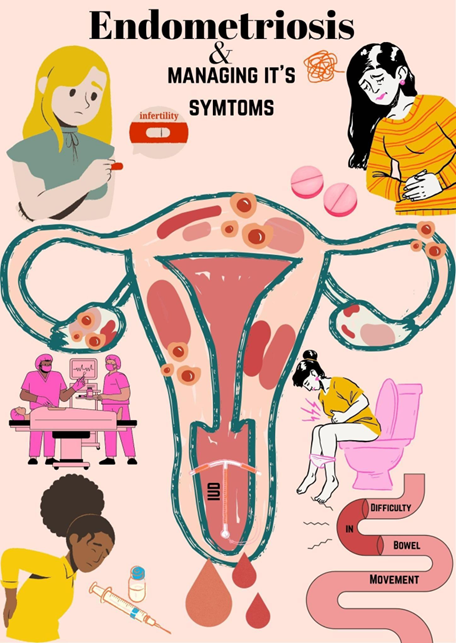
Endometriosis is a condition characterized by the growth of tissue similar to the uterine lining in areas outside of the uterus. This misplaced tissue can lead to painful symptoms that affect both the menstrual cycle and everyday activities. Additionally, women with endometriosis may face difficulty in conceiving as a result of scarring and blockages in the fallopian tubes
Why is symptom management important?
Some people with endometriosis suffer from excruciating pain or other symptoms that hinder their ability to attend to professional work and focus on their academics. This can result in lost wages for individuals or families, as well as increased costs for society. Treatment options are way too expensive, imposing an additional financial burden on people who cannot afford them. Currently, there is no cure present for endometriosis. Increased awareness, early diagnosis, and access to quality healthcare may help slow down or
stop the disease’s progression and lessen long-term symptoms.
Who is most affected?
Research indicates that women face an increased risk of endometriosis if they:
- Have a mother, sister, or daughter who has been diagnosed with endometriosis.
- Early puberty (before the age of 11).
- Experience short monthly cycles (less than 27 days).
- Suffer from heavy menstrual bleeding that occurs for over 7 days.
- Are unable to conceive.
Recognizing Common Symptoms
There are several common symptoms of endometriosis, which are listed below:
- Abdominal discomfort in the pelvic area.
- Intense menstrual cramps.
- Abdominal or lower back discomfort during menstruation or between cycles.
- Excessive bleeding during menstruation or less bleeding between periods.
- Pain during sexual intercourse.
- Difficulty conceiving.
- Painful bowel movements or urination.
- Digestive issues such as loose motions, constipation, or bloating.
Medical Treatment Options
Pain Relief Medications
Your healthcare provider might prescribe you over-the-counter (OTC) pain medications. These include non-steroidal anti-inflammatory drugs (NSAIDs) such as Ibuprofen (Advil, Motrin IB, and others) or naproxen sodium (Aleve). They can aid in alleviating the intense pain of menstrual cramps.
Hormonal Therapy
Hormonal medications can help alleviate or eliminate pain associated with endometriosis. The fluctuations in hormone levels throughout the menstrual cycle lead to the thickening and cracking of the uterine wall, as well as bleeding of the endometriosis tissue. Synthetic hormones may help slow the development of this tissue and inhibit the formation of new ones. Hormonal therapy is not a lasting solution for endometriosis. Symptoms may reappear when the treatment is halted. Treatments available for endometriosis include:
Hormonal contraceptives
Hormonal methods such as birth control pills, hormonal patches, shots, implants, and vaginal rings containing estrogen and progestin in combination therapy or progestin-only options can help regulate the hormones that trigger endometriosis. Many females experience reduced and shorter menstrual bleeding while taking birth control. In some instances, hormonal contraceptives may alleviate or eliminate pain. The likelihood of experiencing relief appears to increase if birth control pills are taken continuously for a year or longer without interruptions.
Hormonal IUD
Your healthcare professional will insert an intrauterine device (IUD) directly into your uterus as a form of birth control. IUDs represent the most frequently utilized variety of long-acting reversible contraception (LARC). The IUD releases progestin, which is the hormone that has the potential to lessen period severity
or even eliminate them. Consequently, it often alleviates the discomfort associated with endometriosis and painful menstrual cycles. IUD might
- Decreases the size of the endometriosis lesion.
- Relieve the pain in the pelvis and inflammation.
- Lessen menstrual bleeding.
GnRH agonists/antagonists
This medication halts the hormones responsible for your menstrual cycles. Essentially, it pauses the reproductive system to help reduce your pain.
- OrilissaⓇ is an oral GnRH antagonist.
- LupronⓇ is a GnRH agonist administered through an injection into your skin.
Aromatase inhibitor
These medications are designed to decrease the levels of estrogen in your body. Your health care provider may suggest using an aromatase inhibitor adjunct to progestin or combined oral contraceptives to manage endometriosis.
Danzol (DanocrineⓇ)
This is a different type of hormonal medication that stops the production of the hormones responsible for triggering your menstrual cycle. When using this medication for the symptoms of endometriosis, you might experience irregular menstrual periods, or they may cease altogether.
Surgical Options
The objective of surgery is to eliminate the tissue affected by endometriosis. Surgical treatments of endometriosis involve:
Laparoscopy
In this process, your surgeon will create a small incision in your abdomen and place a slender tube-like instrument known as a laparoscope into your body. The horoscope is equipped with a high-definition camera that allows visualization of the inside of your body to detect endometriosis tissue. Your surgeon then introduces another surgical tool to excise the affected tissue.
Hysterectomy
It is a procedure that involves the removal of the uterus. In the past, removing both the uterus and ovaries was believed to be the best solution for endometriosis. Currently, many specialists view it as a last option to alleviate pain when other treatments have failed to do so.
Lifestyle and Home Management
Diet Changes
To alleviate inflammation and discomfort associated with endometriosis, it is beneficial to follow a nutrient-rich, balanced diet that mainly consists of plant-based foods abundant in vitamins and minerals. Incorporate these foods into your meals.
- Fibre-rich foods like fruits, vegetables, legumes, and whole grains.
- Iron-rich options such as dark leafy greens, broccoli, fortified grains, nuts, and seeds.
- Sources of essential fatty acids include salmon, sardines, herring, trout, walnuts, chia seeds, and flaxseeds.
- Foods rich in antioxidants are found in vibrant fruits and vegetables, including oranges, berries, dark chocolate, spinach, and beets.
Certain foods can impact hormone regulation, especially the balance of estrogen, which may adversely affect individuals with endometriosis. Furthermore, avoid those foods that can trigger inflammation in your body, potentially intensifying pain or worsening the condition. The following foods, which have to be avoided, include:
- Alcohol
- Caffeine
- Gluten
- Red meat
- Saturated and trans fats
Physical Activity and Alternative Therapies
Physical activity might also aid in managing endometriosis because exercise helps reduce the estrogen levels in your body, which is quite beneficial for women dealing with endometriosis, and also stimulates the release of those hormones that are responsible for the promotion of a sense of well-being. For instance, relaxation methods might prove advantageous. These techniques could encompass;
- Mindful meditation.
- Yoga.
- Acupuncture.
- Therapeutic massage.
- Chiropractic treatment involves a certified practitioner realigning the spine or other areas of your body.
- Herbal remedies like cinnamon bark or licorice root.
- Nutritional supplements such as vitamin B1, magnesium, or omega-3 fatty acids.
Heat Therapy
Soaking in a warm water bath and using a heating pad can aid in relaxing the pelvic muscles. This reduces cramps and discomfort.
Emotional and Mental Health Support
Consider becoming a part of a support group if you are dealing with endometriosis or issues related to infertility. It can be beneficial to connect with others who understand your emotions and experiences. If you are unable to locate a support group nearby, then search for one on the internet and build a virtual connection for emotional and mental health support.
Conclusion
Addressing endometriosis symptoms is crucial because the condition can significantly affect daily-life activities, leading to intense pain and impacting work, education, and emotional well-being. As there is no existing cure available, we’ve to prioritize prompt diagnosis, effective medical treatments, lifestyle modifications, and emotional support can aid in alleviating symptoms and preventing further progression of this condition. With appropriate care, many people dealing with endometriosis can enhance their quality of life, gain a better sense of control over their health, and maintain their daily routine with added ease and confidence.
FAQs
Can endometriosis go away on its own?
In certain cases, after menopause, the issue of endometriosis may resolve because of the drop in levels of estrogen.
What occurs if endometriosis is not treated?
As time passes, the endometrial-like tissue that grows outside of your uterus can cause cysts, adhesions, and scar tissue. This may result in enduring intense pain, particularly during menstruation.
Can you conceive if you got endometriosis?
Indeed, pregnancy is possible, but it may be more difficult for those with endometriosis. You have to discuss it with your healthcare provider to get a suitable treatment option to help you get pregnant. Surgery might be necessary to get rid of this condition.
Is the prevention of endometriosis possible?
This is not a condition we can prevent, but certain factors help reduce the risk of its development. Endometriosis appears to be less common in females who:
- Have experienced multiple pregnancies.
- Engage in breastfeeding.
References
- Cleveland Clinic [Internet]. [cited 2025 Nov 11]. What is endometriosis? Available from: https://my.clevelandclinic.org/health/diseases/10857-endometriosis
- Endometriosis [Internet]. [cited 2025 Nov 11]. Available from: https://www.who.int/news-room/fact-sheets/detail/endometriosis
- National Institute of Child Health and Human Development (NICHD). What are the risk factors for endometriosis? [Internet]. U.S. Department of Health & Human Services; [cited 2025 Nov 11]. Available from: https://www.nichd.nih.gov/health/topics/endometri/conditioninfo/at-risk
- Mayo Clinic Staff. Endometriosis – Diagnosis and treatment [Internet]. Rochester (MN): Mayo Clinic; 30 Aug 2024 [cited 2025 Nov 11]. Available from: https://www.mayoclinic.org/diseases-conditions/endometriosis/diagnosis-treatment/drc-2 0354661
- Cleveland Clinic [Internet]. [cited 2025 Nov 11]. Intrauterine device (IUD): birth control, use & side effects. Available from: https://my.clevelandclinic.org/health/treatments/24441-intrauterine-device-iud
- IUD for endometriosis: Benefits and side effects [Internet]. 2019 [cited 2025 Nov 11]. Available from: https://www.medicalnewstoday.com/articles/326092
- Healthline [Internet]. 2017 [cited 2025 Nov 11]. Endometriosis diet: foods to eat and foods to avoid. Available from: https://www.healthline.com/health/endometriosis/endometriosis-diet