Imagine waking up each morning feeling refreshed, energized, and ready to tackle your day with focus and positivity. For many, this is a distant dream, often interrupted by insomnia or late-night phone scrolling. However, the foundation of a productive, healthy life begins with something simple: a healthy sleep routine.
Creating a sleep schedule that your body loves is not just about quantity; it’s about quality, consistency, and nurturing both your mind and body. Most adults require 7–9 hours of sleep every night, but the quality and timing of that sleep are just as important as the hours themselves. In this blog, we will cover the signs of an unhealthy sleep pattern and the ways to set up a healthy sleep schedule.
Signs That You Need to Fix Your Sleep Schedule
Sometimes, your body gives you clear signals that your sleep routine is not on the right track. If you hear any of these silent whispers, then note that it might be time to reset your schedule:
- Difficulty falling asleep at night or waking up multiple times during the night
- Feeling unusually tired during the day, even after a full night’s sleep
- Mood swings, irritability, poor concentration, or decreased motivation
- Relying heavily on caffeine or naps to get through the day
Ignoring these signs can slowly take a toll on both mental and physical health, making it harder to regain a balanced routine over time.
How to Create a Healthy Sleep Routine
Here are a few steps through which you can create a healthy sleep routine:
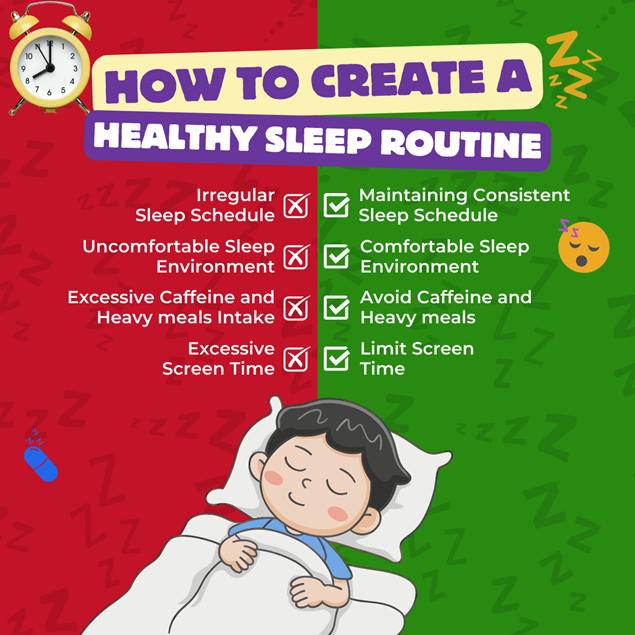
1. Set a Consistent Sleep Schedule
The cornerstone of a healthy sleep routine is consistency. Going to bed and waking up at the same time every day, including weekends, signals your body’s internal clock to establish a rhythm. This routine allows your body to anticipate sleep, helping you fall asleep faster and wake up feeling refreshed.
Even if you don’t feel tired at your set bedtime, sticking to the schedule is crucial. Over time, your body will naturally adjust, and falling asleep will feel effortless.
2. Manage Stress and Anxiety
Stress and anxiety are common invaders of your healthy sleep schedule. Racing thoughts about work, university, deadlines, or personal matters can make your mind restless, delaying sleep and affecting overall rest quality. Overthinking and chronic stress can even lead to insomnia or fragmented sleep, which can harm both mental and physical health.
Here’s what you can do to manage the stressful thoughts that conquer your mind as you try to sleep:
- Avoid paying too much attention to stressful tasks right before sleeping
- Engage in calming activities such as reading, meditating, or taking a warm shower
- Practice deep breathing exercises or gentle stretches to relax your body
- Seek professional help if anxiety persists
By actively managing stress, you create a mental environment conducive to restful sleep.
3. Limit Electronics before Bed
Electronic devices such as smartphones, tablets, and laptops emit blue light that interferes with melatonin production, a hormone that regulates sleep. Using these devices right before bedtime can make it harder to fall asleep, trigger restlessness, and even contribute to mood swings.
Aim to limit screen exposure 20–30 minutes before bedtime. Instead of scrolling endlessly or binge-watching shows, opt for offline relaxing activities. Journaling or reading a book can help your mind transition into a sleep-ready state.
4. Optimize Your Sleep Environment
Your environment significantly impacts sleep quality. To optimize your sleep pattern and quality, aim to create a space that promotes relaxation and minimal disruption. Here are a few tips that can help your body move toward the sleep initiation phase:
- Keep your room dark using blackout curtains or eye masks
- Maintain a quiet environment, using earplugs if necessary
- Ensure your mattress and pillows are comfortable and supportive
- Maintain a cool, comfortable temperature for optimal sleep
A well-organized and calming environment signals to your body that it’s time to rest, improving both the quality and quantity of sleep.
5. Limit Daytime Naps
Short naps can be refreshing, but long or irregular naps can disrupt your nighttime sleep routine. Limit afternoon naps to 20–30 minutes and avoid napping too late in the day. This ensures that your body is tired enough to fall asleep at your designated bedtime, maintaining consistency in your sleep schedule.
6. Avoid Stimulants and Heavy Meals before Bed
Caffeine and large meals close to bedtime can interfere with your body’s natural sleep signals. Try to avoid coffee, energy drinks, or spicy and heavy meals at least 3–4 hours before sleep. Instead, opt for light snacks or herbal teas, which promote relaxation.
Conclusion
Establishing a healthy sleep routine is a gradual process, but with consistency, it becomes a natural part of your lifestyle. Stress management, limiting electronic use, optimizing your sleep environment, and mindful daytime habits all work together to improve your sleep quality. Over time, your mind and body will thrive on this structure, making you more alert, productive, and emotionally balanced during the daytime.
Remember, sleep is not a want; it’s a need. It’s actually a fundamental pillar of health. Prioritize it today for a vibrant, focused, and healthy day tomorrow.
FAQs
1. How long does it take to develop a new sleep routine?
It typically takes 2–3 weeks of consistent effort for your body to adjust to a new sleep schedule. Be patient and persistent.
2. Can short naps improve my sleep routine?
Yes, short naps of 20–30 minutes can boost alertness without interfering with nighttime sleep. Avoid long or late-day naps.
3. What if I struggle with anxiety at night?
Incorporate relaxing bedtime routines like meditation, reading, or warm baths. If anxiety persists, consult a mental health professional for guidance.
4. Is it okay to sleep late on weekends?
Sleeping in occasionally is fine, but large deviations from your schedule can disrupt your sleep rhythm. Try to wake up within an hour of your regular time.
5. Does diet affect sleep?
Yes, heavy meals, caffeine, and alcohol close to bedtime can disrupt sleep. Opt for lighter meals and limit stimulants in the evening.