INTRODUCTION
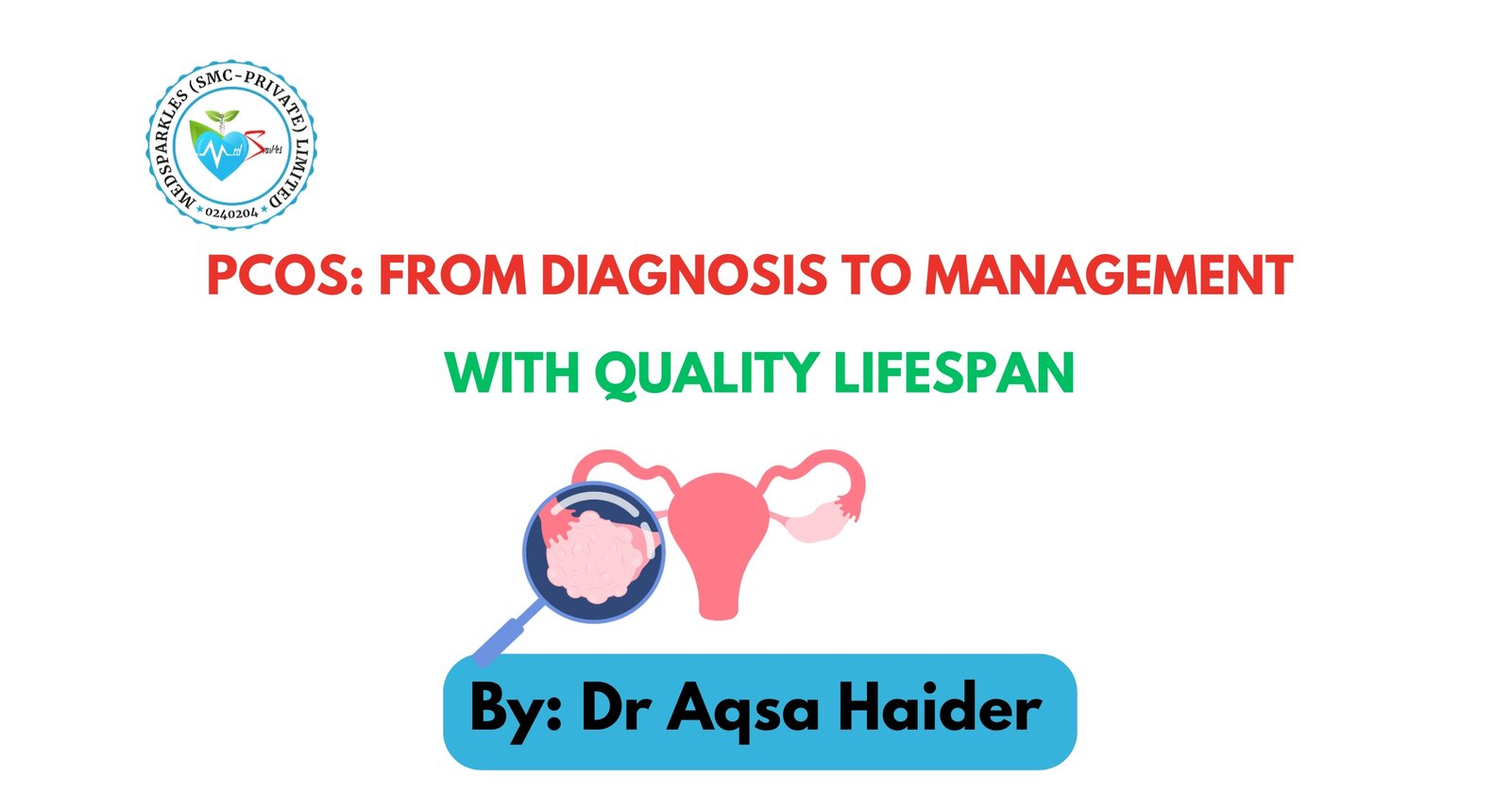
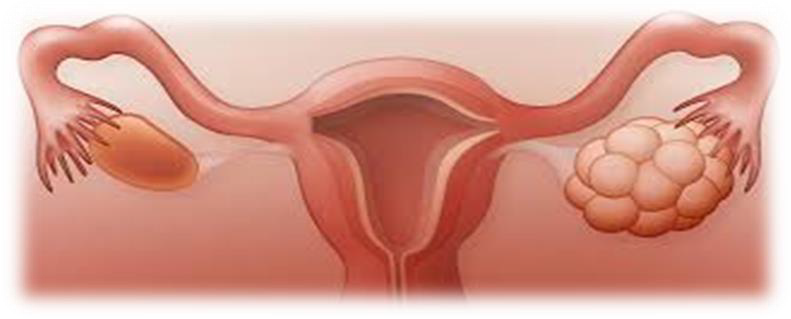
PCOS is a prevalent disorder that affects the endocrine system and is characterized by multiple symptoms and abnormal physiology. It is most commonly observed in women of reproductive age and characterized by following features:
Clinical (absence of ovulation),
Biochemical (higher androgens and luteinizing hormones level)
And morphological (Polycystic ovaries) affects the endocrine system.
According to NATIONAL INSTITUTE OF CHILD HEALTH, PCOC can be defined as the presence of both clinical and biochemical signs of hyperandrogenism and anovulation.
As it affects the endocrine system, its major symptoms include the hormonal imbalance, (significantly excessive androgens), irregular menstrual cycles, insulin resistance (according to studies 70℅ of PCOS women), weight gain, carbs cravings.
The PCOS women are more prone to diabetes mellitus type 2, cardiovascular ailments and other metabolic dysfunctioning.
These women also have disturbed sleep patterns which might be due to depression, irregular cycle, obesity, and irregular eating due to mood disturbances.
It has also been evidenced through prevalence studies that the PCOS women are also surviving with the anxiety, depression, and body shaming which leads to poor quality of life.
PCOS is an under researched and attention seeking because of its increasing prevalence rate of 8 to 13% which means that 1 every 10 woman is diagnosed with PCOS and along with its metabolic disturbances, it leads to the obesity which is a psychological, physical and physiological affecting factor for a women with PCOS. However in Pakistan the PCOS prevalence rates are much higher of about 50 to 55.41%. According to the multiple researches it has been evaluated that PCOS can affect both obese and lean bodies, approx. 75℅ and 25℅ respectively.
PCOS can be considered as a great physiological, psychological and clinical challenge with lifetime metabolic and reproductive challenging consequences.
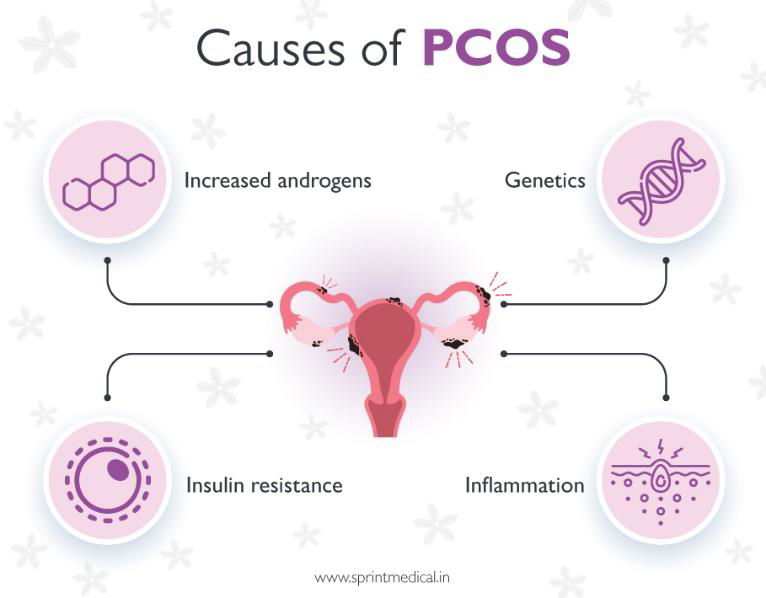
How insulin resistance and androgens Causes PCOS:
The insulin resistance is augmented by obesity. This leads to an excessive insulin in body which in turn causes the activation of excessive androgens production hence, developing PCOS. Moreover the inflammation which is the primary outcome of obesity, affects the physiology of ovaries by altered adipokines.
DIAGNOSIS:
The most commonly used diagnostic criteria for PCOS is Rotterdam criteria in which two of the following three conditions must meet that are oligoovulation (irregular ovulation), hyperandrogenism, ultrasound infographics
Common tests and investigations:
Laboratory tests to calculate free testosterone, androgen index and bioavailable testosterone to assess the hyperandrogenism.
Evaluation of clinical hyperandrogenism by using Ferriman- Gallwey score (a clinical tool used to quantify hirsutism)
Oligo-amenorrhea a diagnostic marker of PCOS.
The biomarkers that confirm the metabolic syndrome can also be tested for the diagnosis of PCOS with metabolic syndrome and that substance is telomerase which is seen to be lower in PCOS patients as well as metabolic syndrome patients.
The Oral Gluco Tolerance Test is recommended for the PCOS patient’s diagnosis.
WHAT COMPLICATIONS TAKE PLACE IF LEFT UNTREATED?
If PCOS women do not get the treatment on the right time and somehow ignoring the symptoms then, it will not take too much time to turn the symptoms into complications. The complications that PCOS WOMEN are prone to develop are:
Fatty liver disease
Sleep apnea
Diabetes due to insulin resistance and ignoring the metabolic dysfunctioning
Heart disease risk
Endometrial cancer risk
Long-term fertility challenges
SIGNS AND SYMPTOMS:
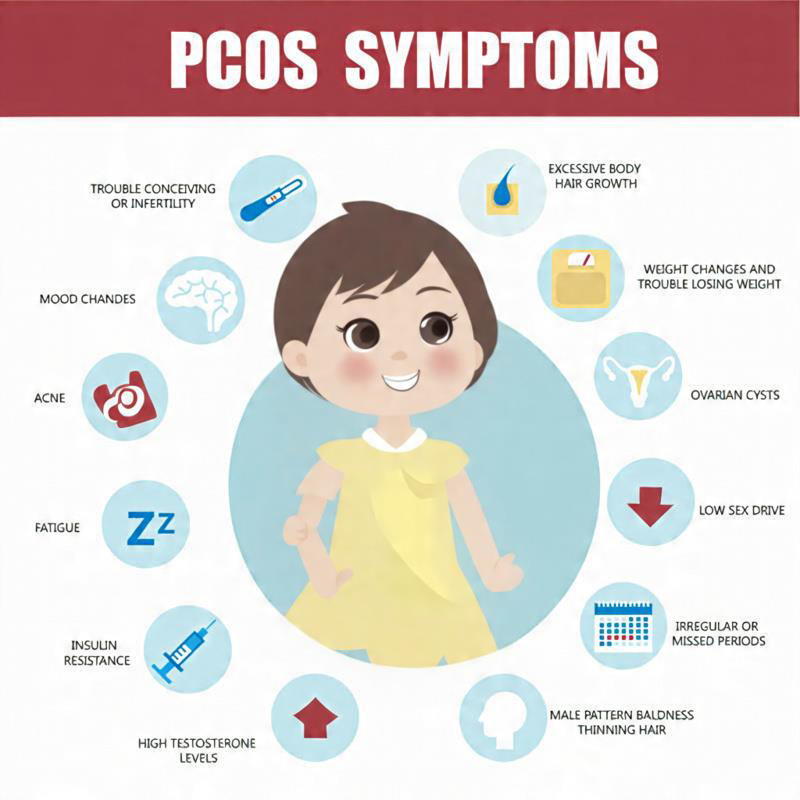
The hormonal imbalance and insulin resistance are proven to be the core features of the following clinical symptoms:
Hirsutism Acne Fatigue Mood swings Amenorrhea Infertility issues Weight gain Stress Anxiety depression Hair thinning and hair loss. Alopecia
TREATMENT AND MANAGEMENT:
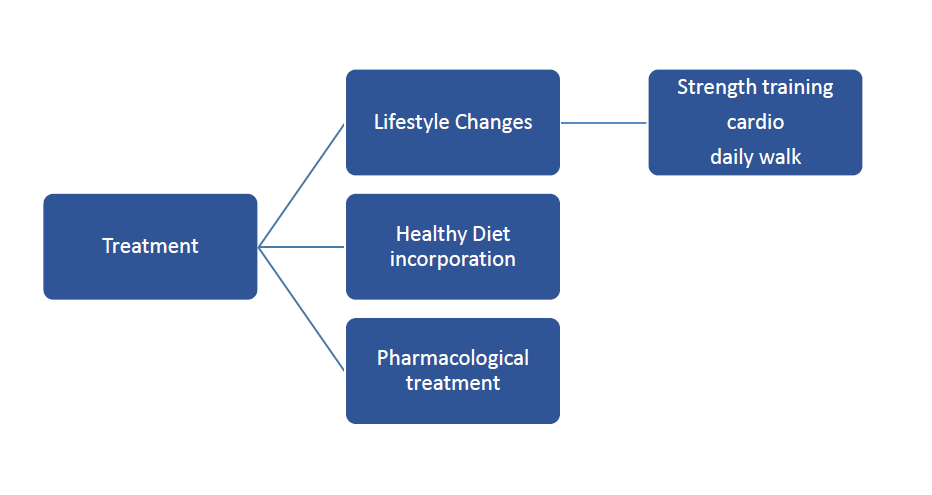
Lifestyle changes are considered to be the First line therapy for PCOS women. It includes nutrition changes, incorporation of physical activity (like cardio and strength training) and behavioral therapy.
WHAT CHANGES IN THE NUTRITION CAN BE MADE?
Here nutrition changes means medical nutrition therapy which is recommended to improve the signs and symptoms of PCOS. The personalized fixing of diet intake by taking in considerance the macro and micro nutrients for primarily impacting insulin sensitivity regardless of weight loss. Intake of high fiber, high protein and low carb diet.
PHARMACOLOGICAL TREATMENT:
Incorporating the seed cycling:
Myoinositol (supplement)
Topical and cosmetic therapies for fixing the hirsutism and acne.
The pharmacological treatments that are used to be prescribed are:
Estrogen-progesterone contraceptives
Metformin (insulin sensitizing agent)
Antiandrogens
Other treatment options for fertility problems if not conceiving naturally then ovulation induction, intrauterine insemination, and invitro fertilization will be recommended.
MYTHS vs FACTS ABOUT PCOS:
1) Losing weight cures PCOS.
PCOS can’t be cured but by losing weight you are significantly improving symptoms.
2) PCOS only affects overweight women:
Lean women can also develop PCOS. And weight gain can be due to insulin resistance.
3) You can’t get pregnant if you have PCOS:
Although PCOS causes fertility issues but it doesn’t mean that you can’t conceive. The women with PCOS can also get pregnant naturally or synthetically by improving their diet, lifestyle, or through the recommended treatments (pharmacological or advanced like intrauterine insemination, ovulation induction, invitro fertilization etc.)
4) PCOS only affects your reproductive system:
By definition it can be seen that PCOS is a metabolic disorder with multiple symptoms like it causes the endocrine changes, cardiovascular problems, diabetes etc.
5) Birth control pills cure PCOS:
These pills only regulate your periods and improve the symptoms not curing the PCOS. Once you quit from these pills, the symptoms will re-appear.
PCOS and Mental Health
Through multiple studies it can be seen that here is an increase incidence of depressive disorders among the PCOS patients either the adolescents or women. Its prevalence rate is about 14.9% while the stress prevalent rate in these patients is about 40%. For the psychiatric treatment the identification of risks, right time diagnosis, and psychotherapy are important to improve the quality of life and mental health.
In the light of multiple studies following parameters can be used to evaluate the mental disorders in the PCOS patients:
Body Image Concerns Inventory (BICI): The PCOS patients have the body image concerns and show lower BICI.
Health Related Quality of LIFE (HRQOL): A constructed questionnaire enveloped with 20 items (basically focusing the problems that the PCOS patients are facing like emotions, mood, and lack of attractiveness, self-care, loneliness, and menstrual cycle problems etc.) Mindful Attention Awareness Scale (MAAS) and the Metacognition Scale Child and Adolescent Form (MCQ-C): For the assessment of mindfulness in patients of PCOS with hirsutism and Meta cognition in patients with hyperandrogenism
Along with physicians, gynecologist and endocrinologist the PCOS patients are required to be counsel by the psychiatrist also for the quality of their mental health and peace of mind.
Also the care specialists for the other comorbidities like cardiologist and diabetes treatment is also recommended.
Tips for diet and physical activities:
Intake of high fiber, low carbs and high protein in diet.
The first meal of a day should be protein rich
Always being hydrated
Should actively take part in slow walking for an hour done in two intervals or multiple intervals for the mood improvement and stress relieving.
Focus on the strength training at least 4 times per day for better quality of life.
Don’t overthink.
Story of Aliza a PCOS patient:
At the age of 25, a married girl named Aliza noticed the irregularity in her periods, also having acne and weight gain despite active routine. Firstly, she ignored her symptoms and just taking stress but as symptoms worsen, she visited a doctor upon diagnosis the PCOS confirmed.
She was worried about infertility. But with support, Aliza tried to improve the quality of life by improving the quality of her diet, physical activity by going for strength training and regular walking and also took the medications as prescribed. The outcomes in the shape of improving her menstrual cycles, relief from stress, increasing strength, losing inches returned her confidence and self believe along with quality life.
PCOS doesn’t need cure – it needs the management of symptoms.
CONCLUSION:
PCOS is not just about the menstrual cycles it’s a prevalent disorder with multiple co morbidities like hormonal imbalance, diabetes, cardiovascular problems, sleep problems, psychological problems etc. And these patients are used to be survive with all aspects physiological, physical, and psychological need more specific cares and attention related to their problems.
Its symptoms include insulin resistance, irregular periods, excessive facial hairs, alopecia, mood swings, weight gain etc.
The first line therapy that is recommended to these patients is improving diet, lifestyle, incorporating some physical activities. Secondly these patients are recommended to take the pharmacological treatment as prescribed by the doctor.
The PCOS patients are also prone to develop depressive disorders and for this they are required to consult a psychiatrist.
The PCOS patients are needed to adapt a healthy lifestyle to lead healthy, fulfilling lives and break the barrier posed by the PCOS.
FREQUENTLY ASKED QUESTIONS (FAQs)
1: Is PCOS curable?
No it’s not. But we can manage its symptoms for a healthy life span.
- What other comorbidities does PCOS causes?
The other comorbidities that PCOS causes are diabetes mellitus, fatty liver disease, ovarian cancer, cardiovascular diseases (like hypertension, atherosclerosis etc.), sleep apnea, mental disorders etc. - Can a PCOS women get pregnant?
Yes, PCOS woman get pregnant naturally if not then synthetically. - Can a lean woman develop PCOS?
Lean woman can also be affected by PCOS. - What parameters can be used to assess mental disorder in PCOS PATIENTS?
Following are the parameters:
(BICI) – Body image concerns inventory
(HRQOL) – Health related quality of life
(MAAS) – Mindfulness Attention Awareness Scale
(MCQ-C) – Metacognition Child and Adolescents form.
References 1. Armanini, D., Boscaro, M., Bordin, L., & Sabbadin, C. (2022). Controversies in the Pathogenesis, Diagnosis and Treatment of PCOS: Focus on Insulin Resistance, Inflammation, and Hyperandrogenism. International Journal of Molecular Sciences, 23(8), 4110. https://doi.org/10.3390/ijms23084110 2. Calcaterra V, Verduci E, Cena H, Magenes VC, Todisco CF, Tenuta E, Gregorio C, De Giuseppe R, Bosetti A, Di Profio E, Zuccotti G. Polycystic Ovary Syndrome in Insulin-Resistant Adolescents with Obesity: The Role of Nutrition Therapy and Food Supplements as a Strategy to Protect Fertility. Nutrients. 2021 May 28;13(6):1848. doi: 10.3390/nu13061848. PMID: 34071499; PMCID: PMC8228678. 3. Christ JP, Cedars MI. Current Guidelines for Diagnosing PCOS. Diagnostics (Basel). 2023 Mar 15;13(6):1113. doi: 10.3390/diagnostics13061113. PMID: 36980421; PMCID: PMC10047373. 4. Doycheva I, Ehrmann DA. Nonalcoholic fatty liver disease and obstructive sleep apnea in women with polycystic ovary syndrome. Fertil Steril. 2022 May;117(5):897-911. doi: 10.1016/j.fertnstert.2022.03.020. PMID: 35512974. 5. Jakubowska-Kowal K, Skrzyńska K, Gawlik-Starzyk A. Treatment and complications of PCOS in adolescents – what’s new in 2023? Front Endocrinol (Lausanne). 2024 Oct 2;15:1436952. doi: 10.3389/fendo.2024.1436952. PMID: 39415788; PMCID: PMC11479989.
REFERENCE FOR IMAGES: - Polycystic Ovarian Syndrome (PCOS. (2025). Polycystic Ovarian Syndrome (PCOS). Dr. Carlos E Quezada OBGYN. https://www.drcarlosequezada.com/education/polycystic-ovarian-syndrome-pcos
- PCOS (Polycystic Ovary Syndrome): Symptoms, Causes, and Treatment. (2020, March 16). Sprint Medical. https://sprintmedical.in/blog/pcos-polycystic-ovary-syndrome
PREPARED BY: Dr. Aqsa Haider