Understanding Prenatal Care:
Pregnancy is a beautiful and transformative journey filled with challenges, excitements, and responsibilities. It is a natural process of baby development inside the mother’s womb and therefore requires attentive care to ensure the health and safety of both mother and child. This is where prenatal care becomes essential.
Prenatal care refers to the comprehensive medical attention provided to expectant mothers by healthcare professionals throughout pregnancy. It involves regular checkups, screening, and personalized guidance designed to monitor maternal health and fetal development. In fact, prenatal care is a holistic approach that encompasses physical, emotional, and educational support, empowering mothers to navigate pregnancy with confidence and well-being.
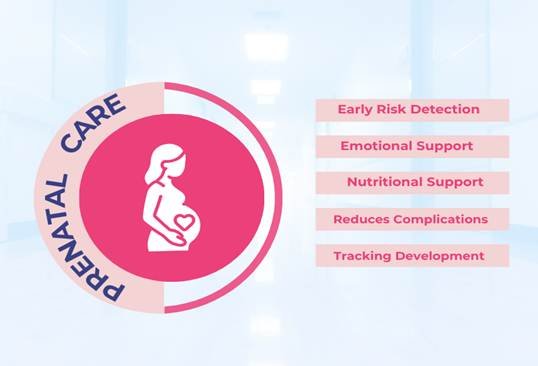
Why Is Prenatal Care Important?
The benefits of prenatal care are enlisted as
1. Early Risk Detection:
Prenatal screening usually involves blood pressure monitoring, urine tests, and specialized blood analysis that help to identify pregnancy-associated complications such as gestational diabetes, preeclampsia, and anemia. Moreover, ultrasound reports are utilized to ensure normal fetal growth. The core purpose behind this early risk detection is that healthcare professionals must implement the preventive interventions and treatment required to support a smooth and stable pregnancy.
2. Nutritional Support and Guidance:
Prenatal care assists in providing nutritional guidance to expectant mothers. Advice on intake of proper nutrients like calcium, iron, and folic acid is crucial for fetal brain and bone development. In addition, doctors monitor the maternal weight gain, ensuring it is sufficient to support optimal fetal growth while simultaneously managing the gain to minimize the risk of pregnancy-related complications.
3. Guidance on Safe Medication Use:
Since not all medications are safe to take during pregnancy, healthcare practitioners provide essential counseling on safe medication use to expectant mothers. This guidance helps the mother avoid potential risks and ensures that any necessary treatment is compatible with the health and development of the fetus.
4. Emotional Support and Mental Well-being:
Pregnancy not only involves a physiological change but also a complex mix of exaggerated emotions that can fluctuate frequently. To effectively cope with emotional stress and anxiety, prenatal care involves psychological support or therapy sessions. These sessions help expectant mothers to remain mentally calm and stable throughout their pregnancy journey.
5. Preparing for Labor and Delivery:
Prenatal care often includes classes on labor stages, pain management options, and breastfeeding techniques. Mothers can discuss preferences for delivery, such as natural birth or cesarean section, with their healthcare team. Furthermore, doctors prepare families for potential complications, ensuring they know what to expect and how to respond.
6. Reducing Infant Mortality and Complications:
Regular check-ups and vaccination of the mother during prenatal care of pregnancy help to reduce premature childbirth and other pregnancy-associated complications, therefore reducing the rate of infant mortality.
7. Tracking Your Baby’s Growth:
One of the main aspects of prenatal care is to track the overall health of the baby’s growth and development. Regular checkups and ultrasounds allow healthcare providers to assess the baby’s size, weight, and overall growth patterns, ensuring that milestones are being met at each stage. This monitoring helps detect potential concerns early, such as restricted growth or developmental anomalies, so that timely interventions can be made.
8. Empowerment with Knowledge:
Prenatal care enables the mother to learn and understand what changes are normal during pregnancy and when to seek help. Moreover, guidance sessions on breastfeeding techniques increase success rates postpartum.
9. Long-Term Health Benefits:
Women who receive prenatal care are less likely to experience long-term complications such as hypertension or diabetes. Mostly, babies benefit from stronger immune systems, better development, and reduced risks of chronic conditions later in life.
How often to have prenatal care visits?
Visits for prenatal care depend on how far along your pregnancy is and how high your risk is for complications. The typical prenatal care schedule for someone who’s 18–35 years old and healthy is:
- Every 4 or 6 weeks for the first 32 weeks.
- Every 2 or 3 weeks for the 32nd-37th weeks.
- Every week from the 37th week until giving birth.
Your doctor might ask you to come in for check-ups more often if you have a high-risk pregnancy.
Conclusion:
Prenatal care is a holistic approach to a healthy pregnancy. By assessing early risk detection and doing nutritional guidance, emotional support, and preparation for delivery, it protects both mother and child. Regular checkups empower expectant mothers with knowledge, reduce complications, and ensure that babies grow strong and healthy. Ultimately, prenatal care provides peace of mind, confidence, and long-term health benefits, making it an essential part of every pregnancy journey.
FAQs
What is prenatal care?
Prenatal care is the medical attention and guidance provided to expectant mothers throughout pregnancy.
Why is prenatal care important?
It helps detect risks early, supports healthy fetal growth, and prepares mothers for safe delivery.
How often should I have prenatal visits?
The frequency depends on pregnancy stage and risk level but typically increases as delivery approaches.