The World Health Organization defines self-care as the ability of individuals, families, and communities to promote health, prevent disease, maintain health, and cope with illness and disability with or without the support of a healthcare provider. A recent survey found that 75% of people find it difficult to prioritize self-care due to common obstacles. Self-care is often neglected, despite its significance, due to several obstacles. Find out how to get past these challenges and put your health first. It takes deliberate effort and mental adjustments to get beyond obstacles to self-care. Start by recognizing and challenging self-defeating thoughts and cultural norms that prioritize productivity over well-being. In the fast-paced world of today, mental health problems are becoming more prevalent. About one in four people suffer from mental health issues each year, according to the World Health Organization (WHO). As this issue has grown, self-care has become an essential strategy for preserving mental health.
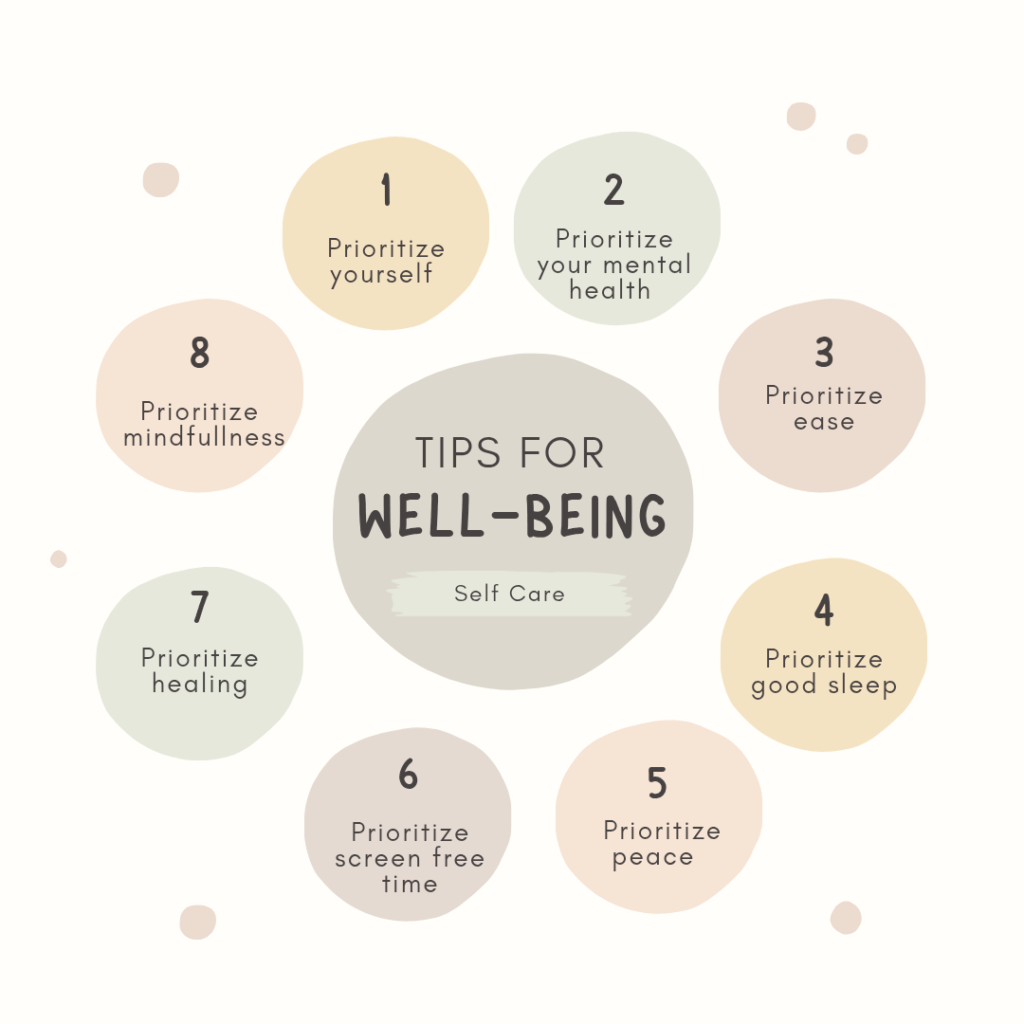
Self-care ideas to get you started:
Here are a few self-care ideas to kickstart your journey:
- Improves sleeping quality.
- Set boundaries
- Ask others for help
- Talk with a trusted friend or loved one
- Prioritize physical and mental health check-ups
- Schedule alone time
- Spend time outdoors
- Take a class that interests you
- Pick up a new hobby
- Take a break from social media or the news.
Importance of Self-Care for Mental Health:
Taking care of ourselves can help us manage stress more effectively, lower our chance of developing mental health issues, and enhance our general quality of life. For mental health, self-care is crucial for the following reasons:
Reducing Anxiety and Stress: Self-care techniques that assist in lowering stress and anxiety levels include yoga, meditation, and deep breathing. These activities support relaxation, lower stress hormone production, and soothe the mind.
Enhances Confidence and Self-Esteem: Taking part in activities that elevate your self-esteem and confidence will help you feel better about yourself.
Mood Enhancement: Relaxing self-care practices, like having a warm bath, might help you feel happier. We can also feel better and experience fewer bad feelings when we do something we enjoy, like reading a book or listening to music.
Minimizes the Chance of Mental Health Issues: Self-care practices can lower the likelihood of mental health issues, including anxiety and sadness.
Here are some self-care tips:
Exercise frequently: Even 30 minutes of daily walking might enhance your health and mood. If you can’t complete 30 minutes at a time, don’t give up; even little workouts add up.
Eat Healthy: Maintain hydration and eat a nutritious diet. Drinking lots of water and eating a balanced diet can help you stay more focused and have more energy all day.
Prioritize Your Sleep: Stick to your routine and ensure you get adequate sleep. Therefore, try to minimize the amount of blue light that comes from your computer or phone before bed.
Prioritize And Set Goals: Choose what needs to be done right away and what can wait. If you feel that you are taking on too much, learn to say “no” to additional assignments. When the day is over, try to be proud of what you have done.
Types of self-care:
There are many kinds of self-care activities, and what suits one individual might not suit another. Here are some examples of self-care.
PHYSICAL SELF-CARE:
As a type of self-care, maintaining your physical health can help you avoid or manage chronic illnesses and enhance your quality of life. Each person has various needs when it comes to physical self-care.
Physical Self-Care Examples:
- Getting enough exercise regularly
- Maintaining proper hydration and eating regular, well-balanced meals that are primarily whole foods
- Taking part in stress-relieving, calming activities
- Making time for sleep
- Getting regular health check-ups
EMOTIONAL SELF-CARE:
Emotionally, self-care lowers stress and anxiety, which elevates mood and awareness and has a favorable impact on confidence-building and healthy coping mechanisms. This can involve writing, therapy, or the use of deep breathing or meditation as relaxation methods. Taking part in enjoyable activities, such as hobbies or spending time with loved ones, may also be a part of it.
Emotional Self-Care Examples:
- Writing, music, or art can be used to communicate and comprehend emotions.
- enhancing emotional support networks by having deep discussions or doing meaningful activities with friends and family.
- Create a thankfulness diary to recognize life’s blessings.
- Express and acknowledge feelings without passing judgment.
- Talk about your feelings with individuals you can trust.
- Get involved in enjoyable activities.
MENTAL SELF-CARE:
The goal of mental self-care is to promote mental wellness by engaging in brain-stimulating activities and adopting constructive mental habits. You can manage stress, reduce your chance of getting sick, and feel more energized by taking care of your mental health. Although no two people are the same, the following techniques can help you focus and manage stress.
Mental Self-Care Examples:
- Regularly use relaxation applications or programs to include breathing techniques, yoga, meditation, and muscular relaxation.
- Remind yourself every day of your blessings to cultivate appreciation. Write them down at night or replay them in your mind.
- Engage in enjoyable creative pursuits.
- Engage in puzzles or read a book.
- Engage in brain-teaching activities like Scrabble and crossword puzzles.
- Try something new.
- Keep your mind active.
- Face your negative ideas.
- Seek expert assistance as necessary.
SOCIAL SELF-CARE:
It includes establishing and preserving relationships with people who are helpful, such as hanging out with friends and family or attending a support group.
Social Self-Care Examples:
- Nature friendships
- Spend time with your loved ones!
- Take part in community outreach initiatives.
Spiritual self-care:
It includes activities such as mindfulness, meditation, and spending time in nature. It could also include practicing religion or spirituality, which gives our lives direction and meaning.
Spiritual Self-Care Examples:
- Meditation
- Spending time in nature or going hiking
- Enjoying uplifting music
- Praying
- Participating in online spiritual communities or activities
- Speaking with a spiritual counselor
- Create a fulfilling spiritual life.
- Emphasize your own fulfillment and meaning.
Making self-care a priority can help people improve their mental health by fostering resilience, serenity, and enjoyment. Self-care improves general life satisfaction, contentment, and happiness in order to achieve the best possible work-life balance and a high-quality life. Self-care encompasses any practice or activity that prioritizes your health and well-being. It includes taking care of your physical, mental, and emotional needs in a more basic way.
Self-care is crucial for mental health since it lowers stress and fosters wholesome connections. A person’s physical, emotional, social, and mental well-being are all addressed by self-care. Self-care techniques can lower stress, elevate mood, and improve one’s general quality of life. Everybody’s definition of self-care is different. Depending on your individual needs, your self-care practices may be different from those of people around you.
Conclusion:
A commitment to self-care is a pledge to include ourselves in the equation of our lives. Making self-care a priority can help us become more resilient, have better mental health, and be happier overall. Recall that caring for oneself is essential and not a luxury. Watch your mental health improve by incorporating self-care into your daily routine right now.
FREQUENTLY ASKED QUESTIONS:
Q: What are some barriers do you face when practicing self-care?
A: Numerous obstacles may stand in the way of our attempts to practice self-care. These encompass both individual situations and systemic elements that can be beyond our control.
Q: With a hectic schedule, how can I make self-care a priority?
A: Making self-care a priority calls for deliberate time management and preparation. Begin by figuring out what activities make you feel refreshed and fitting them into your schedule. It could also entail assigning responsibilities to others, declining obligations that are not absolutely necessary, and acknowledging the importance of self-care for general wellbeing.